Kiowa Blackberry
1 Year Old
$5.95
Ships: 12/01/2026 - 04/15/2027
Description
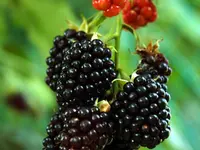
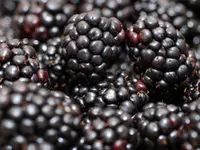
The Kiowa Blackberry is considered one of the 'Worlds Largest Blackberry' measuring up to 3 inches long.
The berries are massive weighing around 9-14 grams each with only about 10 berries filling a pint container. The Kiowa is an erect growing and very high yielding thorny cultivar developed by the University of Arkansas. This sweet-tart and flavorful Kiowa Blackberry plant boasts excellent disease resistance which makes it perfect for home gardeners. and orchard enthusiasts. Hardy in USDA Zones 5b to 9. It requires very few winter chill hours (200 to 300), making it highly successful in warm southern climates. Ripens in July.
Characteristics
| Bloom Color | White |
| Bloom Time | Early Spring |
| Fruit Color | Black |
| Fruit Size | Extremely Large |
| Hardiness Zone Range | 5 - 9 |
| Pollination | Self Fertile |
| Ripens/Harvest | July |
| Shade/Sun | Full Sun |
| Soil Composition | Sandy loamy, slightly acidic |
| Soil Moisture | Well-drained moist |
| Soil pH Level | 5.5 to 6.5 |
| Taste | Sweet Tart |
| Texture | Firm |
| Years to Bear | 1-2 Years |
| Mature Width | 3-4 Feet Wide |
| Mature Height | 4-5 Feet Tall |
Zones
USDA Hardiness Zones
A hardiness zone is a geographic area defined as having a certain average annual minimum temperature, a factor relevant to the survival of many plants. In some systems other statistics are included in the calculations. The original and most widely used system, developed by the United States Department of Agriculture (USDA) as a rough guide for landscaping and gardening, defines 13 zones by long-term average annual extreme minimum temperatures. It has been adapted by and to other countries (such as Canada) in various forms. A plant may be described as "hardy to zone 10": this means that the plant can withstand a minimum temperature of −1.1 to 4.4 °C (30 to 40 °F).
Grows in zones: 5 - 9
This product grows in your zone!
A hardiness zone is a geographic area defined as having a certain average annual minimum temperature, a factor relevant to the survival of many plants. In some systems other statistics are included in the calculations. The original and most widely used system, developed by the United States Department of Agriculture (USDA) as a rough guide for landscaping and gardening, defines 13 zones by long-term average annual extreme minimum temperatures. It has been adapted by and to other countries (such as Canada) in various forms. A plant may be described as "hardy to zone 10": this means that the plant can withstand a minimum temperature of −1.1 to 4.4 °C (30 to 40 °F).
More Information
Be prepared for very sharp, prominent thorns. While they make harvesting a bit painful, they act as an excellent natural barrier to deter animals and pests from raiding the patch.