
American Holly
Not currently available. Please call us at 1-866-586-6283 for availability information.
Description
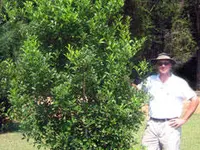
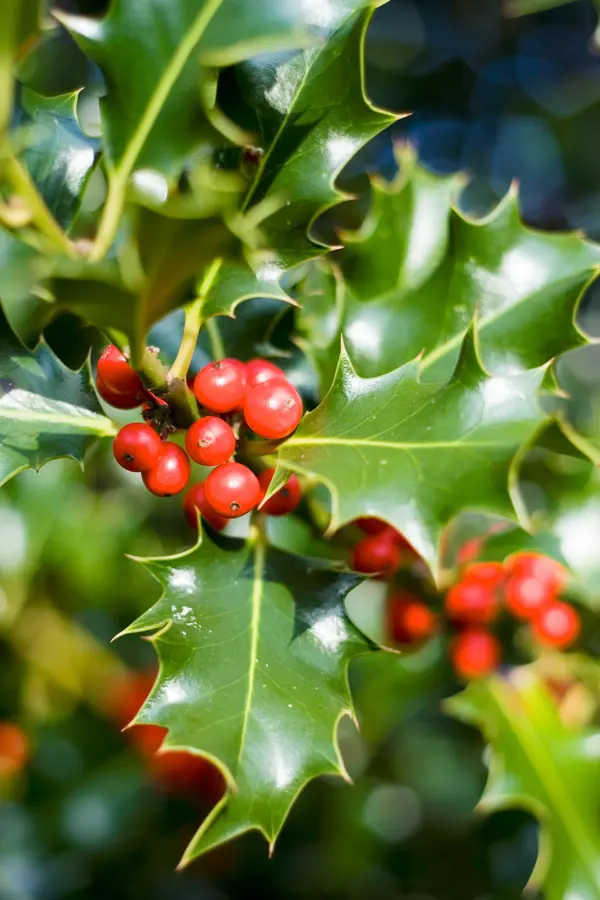
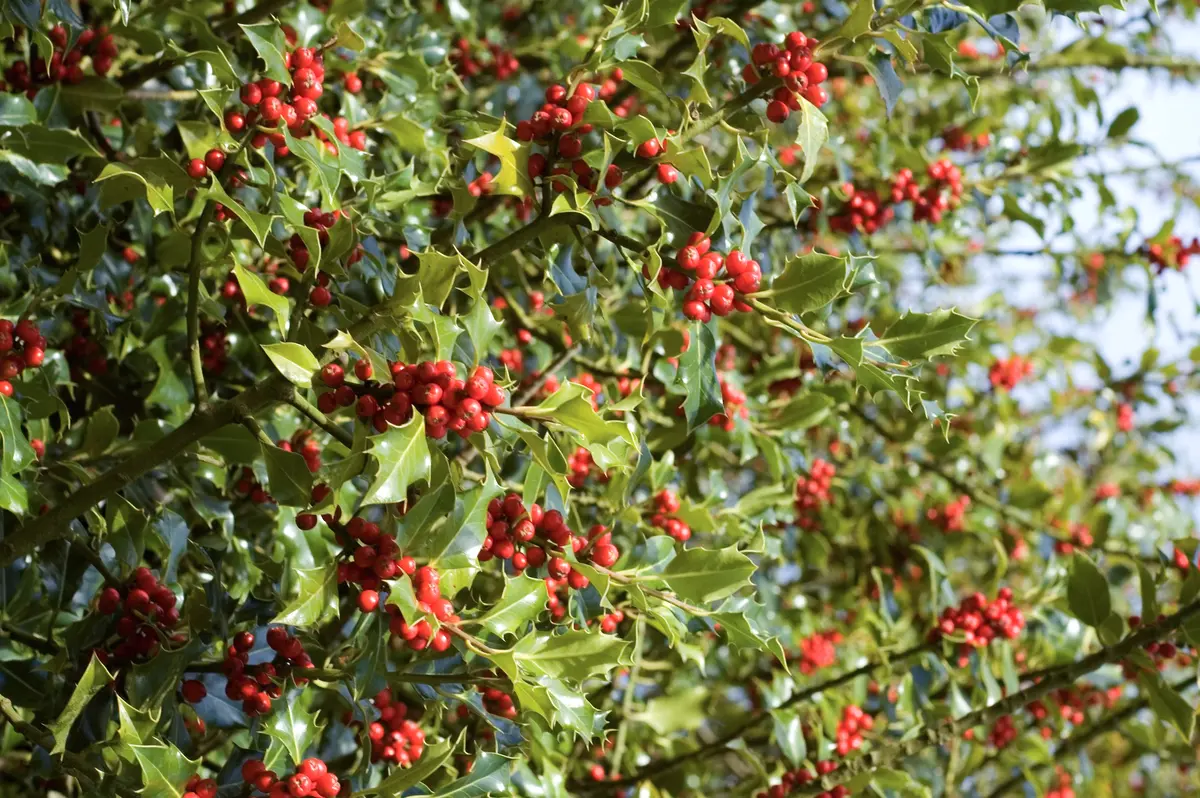
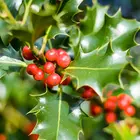
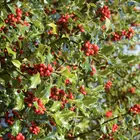
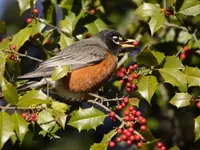
An American Holly Tree can grow 40-60 feet tall and 20-30 feet wide or they can be pruned into a hedge. They grow well in full sun to shade. American Holly trees are resistant to mildew, insects, disease, drought and are easy to prune or shear. American Holly Trees do require male and female plants to produce the beautiful red berries in Fall and Winter. So you need to buy 3 or more to assure they mate.
"When the Pilgrims landed the week before Christmas in 1620 on the coast of what is now Massachusetts, the evergreen, prickly leaves and red berries of American holly (Ilex opaca) reminded them of the English holly (Ilex aquifolium), a symbol of Christmas for centuries in England and Europe. Since then the American holly family, also called white holly or Christmas holly, has been one of the most valuable and popular trees in the Eastern United States for its foliage and berries, used for Christmas decorations, and for ornamental plantings."
Characteristics
| Hardiness Zone Range | 5 - 9 |
Zones
USDA Hardiness Zones
A hardiness zone is a geographic area defined as having a certain average annual minimum temperature, a factor relevant to the survival of many plants. In some systems other statistics are included in the calculations. The original and most widely used system, developed by the United States Department of Agriculture (USDA) as a rough guide for landscaping and gardening, defines 13 zones by long-term average annual extreme minimum temperatures. It has been adapted by and to other countries (such as Canada) in various forms. A plant may be described as "hardy to zone 10": this means that the plant can withstand a minimum temperature of −1.1 to 4.4 °C (30 to 40 °F).
Grows in zones: 5 - 9
This product grows in your zone!
A hardiness zone is a geographic area defined as having a certain average annual minimum temperature, a factor relevant to the survival of many plants. In some systems other statistics are included in the calculations. The original and most widely used system, developed by the United States Department of Agriculture (USDA) as a rough guide for landscaping and gardening, defines 13 zones by long-term average annual extreme minimum temperatures. It has been adapted by and to other countries (such as Canada) in various forms. A plant may be described as "hardy to zone 10": this means that the plant can withstand a minimum temperature of −1.1 to 4.4 °C (30 to 40 °F).