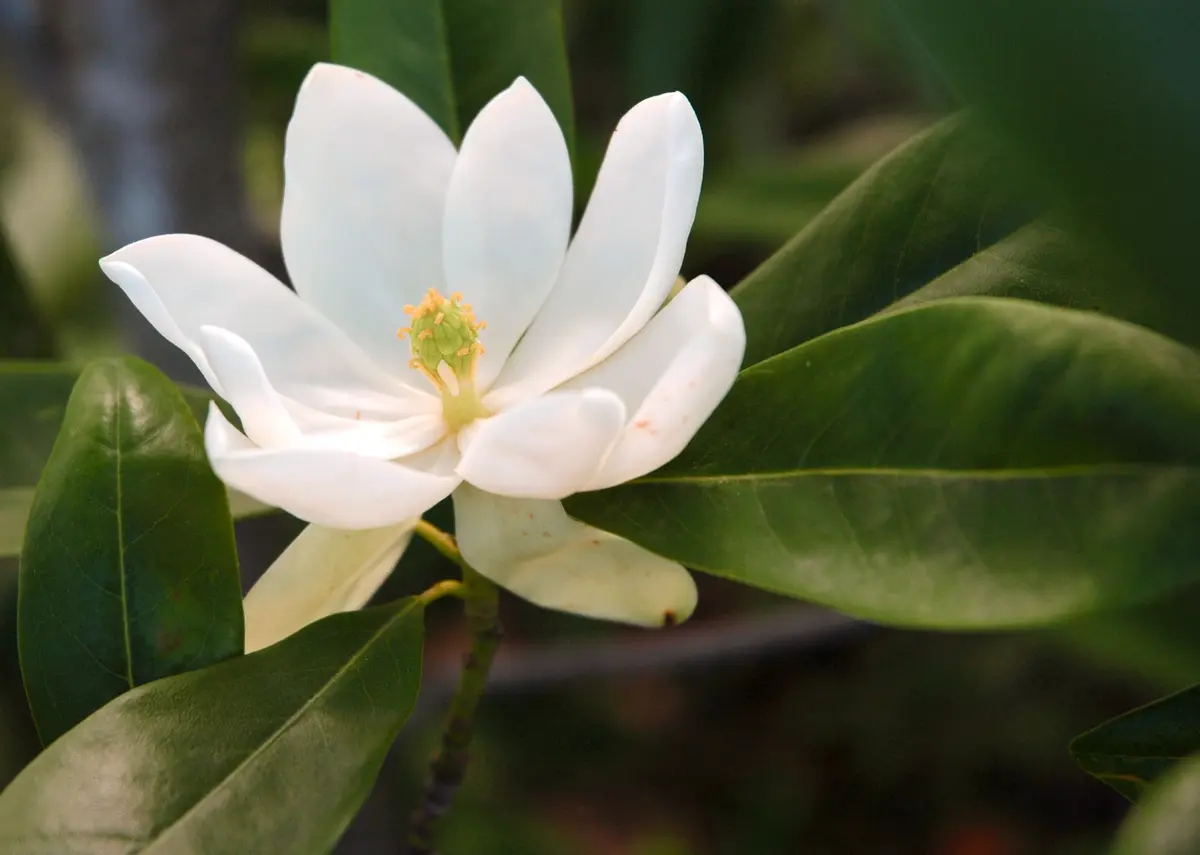
Magnolia virginiana 'Sweetbay'
+/- 1'
$8.95
Ships: 12/15/2026 - 04/01/2027
Description
The Magnolia virginiana, commonly referred to as the Sweetbay Magnolia Tree, is a smaller, semi-evergreen Magnolia. It grows 30 to 50 feet tall, with lemon-scented white flowers, and tolerates wet conditions. If you're wondering where to buy a Sweetbay Magnolia, look no further than Willis Orchards. Enhance your garden with the beauty and fragrance of Sweetbay Magnolia virginiana trees for sale.
Characteristics
| Bloom Color | Creamy-White |
| Bloom Time | Late Spring - Early Summer |
| Hardiness Zone Range | 5 - 9 |
| Shade/Sun | Full Sun to Part Shade |
| Soil Composition | Rich, loamy, and can tolerate poor drainage |
| Soil Moisture | Keep the soil consistently moist. |
| Soil pH Level | 5.5-6.5 |
| Mature Width | 10-35 Feet |
| Mature Height | 10-35 Feet |
Pricing
| Size | Price | Ships |
|---|---|---|
|
+/- 1'
|
$8.95 | 12/15/2026 - 04/01/2027 |
|
+/- 2'
|
$16.95 | 12/15/2026 - 04/01/2027 |
|
3-4'
|
$24.95 | 10/15/2026 - 06/01/2027 |
|
4-5'
|
$34.95 | 10/15/2026 - 06/01/2027 |
Zones
USDA Hardiness Zones
A hardiness zone is a geographic area defined as having a certain average annual minimum temperature, a factor relevant to the survival of many plants. In some systems other statistics are included in the calculations. The original and most widely used system, developed by the United States Department of Agriculture (USDA) as a rough guide for landscaping and gardening, defines 13 zones by long-term average annual extreme minimum temperatures. It has been adapted by and to other countries (such as Canada) in various forms. A plant may be described as "hardy to zone 10": this means that the plant can withstand a minimum temperature of −1.1 to 4.4 °C (30 to 40 °F).
Grows in zones: 5 - 9
This product grows in your zone!
A hardiness zone is a geographic area defined as having a certain average annual minimum temperature, a factor relevant to the survival of many plants. In some systems other statistics are included in the calculations. The original and most widely used system, developed by the United States Department of Agriculture (USDA) as a rough guide for landscaping and gardening, defines 13 zones by long-term average annual extreme minimum temperatures. It has been adapted by and to other countries (such as Canada) in various forms. A plant may be described as "hardy to zone 10": this means that the plant can withstand a minimum temperature of −1.1 to 4.4 °C (30 to 40 °F).