Katsura Tree
1-2'
$14.95
Ships: 01/15/2027 - 04/01/2027
Description
This product cannot be shipped to California.
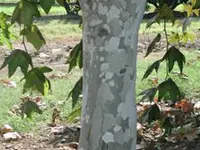
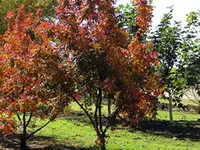
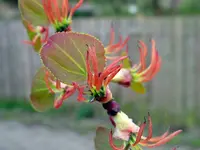
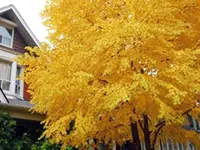
Katsura Trees are unusual but easily grown shade trees. Cercidiphyllum japonicum is known for its beautiful, heart-shaped leaves which turn fantastic shades of bright yellow, pink, purple and red in autumn. In spring, its heart-shaped leaves emerge reddish-purple, changing to blue-green as they mature. Where conditions are suitable, the Katsura plant is fast-growing to 40-60' tall and 30-40' wide, but it is very sensitive to drought and needs deep, permanently moist soil. Under drought conditions, the species will abscise its leaves, however, refoliation may occur once water is made available. The very unique scent produced by the leaves in the autumn is said to resemble burnt brown sugar or cotton candy.
Japanese Katsura trees are spectacular garden trees with beautiful appeal spring - summer and excellent autumn color. Choose Willis Orchards to buy top-quality Katsura trees for sale!
Characteristics
| Hardiness Zone Range | 4 - 8 |
Zones
USDA Hardiness Zones
A hardiness zone is a geographic area defined as having a certain average annual minimum temperature, a factor relevant to the survival of many plants. In some systems other statistics are included in the calculations. The original and most widely used system, developed by the United States Department of Agriculture (USDA) as a rough guide for landscaping and gardening, defines 13 zones by long-term average annual extreme minimum temperatures. It has been adapted by and to other countries (such as Canada) in various forms. A plant may be described as "hardy to zone 10": this means that the plant can withstand a minimum temperature of −1.1 to 4.4 °C (30 to 40 °F).
Grows in zones: 4 - 8
This product grows in your zone!
A hardiness zone is a geographic area defined as having a certain average annual minimum temperature, a factor relevant to the survival of many plants. In some systems other statistics are included in the calculations. The original and most widely used system, developed by the United States Department of Agriculture (USDA) as a rough guide for landscaping and gardening, defines 13 zones by long-term average annual extreme minimum temperatures. It has been adapted by and to other countries (such as Canada) in various forms. A plant may be described as "hardy to zone 10": this means that the plant can withstand a minimum temperature of −1.1 to 4.4 °C (30 to 40 °F).