

Blackcaps
1 Yr.
$9.95
Ships: 12/01/2026 - 04/01/2027
Description
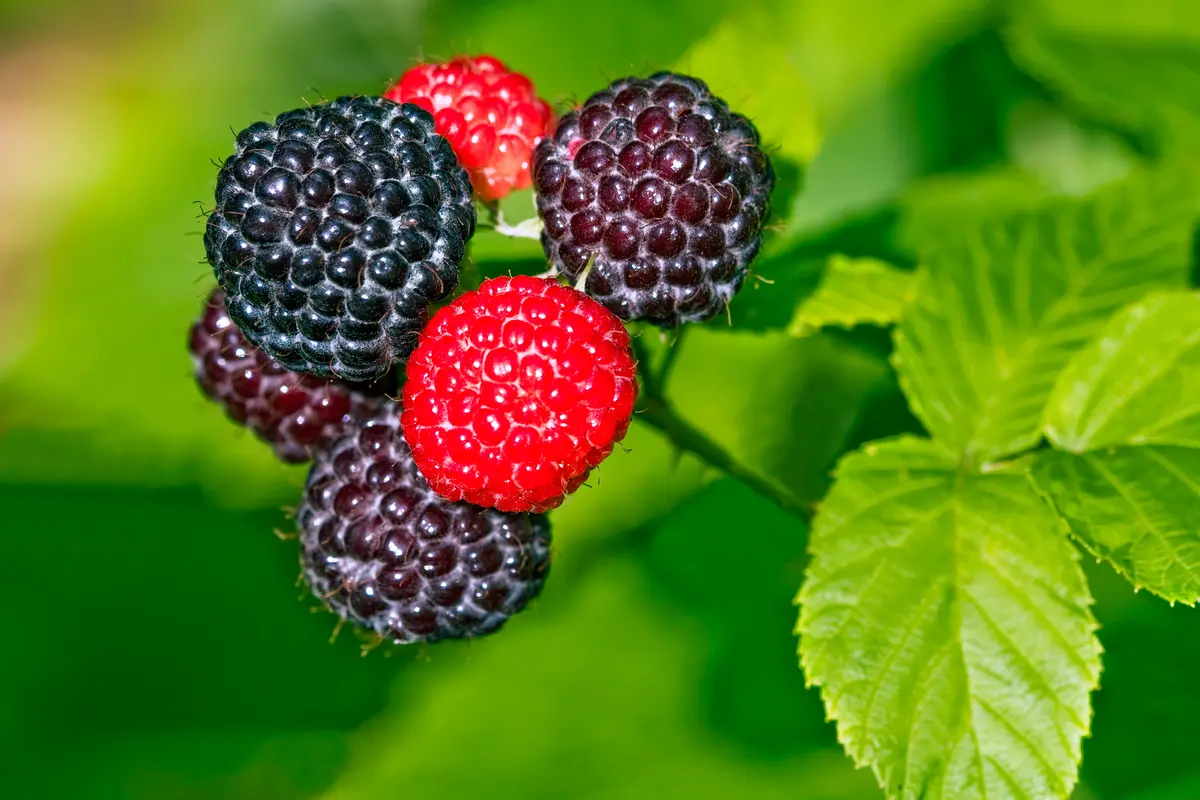
The Cumberland Black Raspberry plants are a rare species belonging to the Rosaceae family and is considered an heirloom cultivar. Black raspberries are considered North Americas Native Superfoods and are exceptionally esteemed for their high antioxidant properties making them the subject of numerous nutritional and health studies. The Cumberland Black is celebrated as the "King of Black Raspberries" because it produces large, glossy, blue-black berries with a rich, sweet, wild flavor. They ripen in July to August, and are primarily harvested for fresh eating, baking, and preserves. The Cumberland Raspberry is a perfect culinary delight.
Characteristics
| Bloom Color | White |
| Bloom Time | Late June |
| Fruit Color | Black |
| Fruit Size | Large |
| Hardiness Zone Range | 4 - 8 |
| Pollination | Self Fertile |
| Ripens/Harvest | July to August |
| Shade/Sun | Full Sun |
| Soil Composition | Slightly acidic, loamy soil that is rich in organic matter |
| Soil Moisture | Well-drained |
| Soil pH Level | 6.0-6.8 |
| Taste | Sweet |
| Texture | Firm |
| Years to Bear | 1-2 Years |
| Mature Width | 3 to 5 Feet Wide |
| Mature Height | 3 to 6 Feet Tall |
Zones
USDA Hardiness Zones
A hardiness zone is a geographic area defined as having a certain average annual minimum temperature, a factor relevant to the survival of many plants. In some systems other statistics are included in the calculations. The original and most widely used system, developed by the United States Department of Agriculture (USDA) as a rough guide for landscaping and gardening, defines 13 zones by long-term average annual extreme minimum temperatures. It has been adapted by and to other countries (such as Canada) in various forms. A plant may be described as "hardy to zone 10": this means that the plant can withstand a minimum temperature of −1.1 to 4.4 °C (30 to 40 °F).
Grows in zones: 4 - 8
This product grows in your zone!
A hardiness zone is a geographic area defined as having a certain average annual minimum temperature, a factor relevant to the survival of many plants. In some systems other statistics are included in the calculations. The original and most widely used system, developed by the United States Department of Agriculture (USDA) as a rough guide for landscaping and gardening, defines 13 zones by long-term average annual extreme minimum temperatures. It has been adapted by and to other countries (such as Canada) in various forms. A plant may be described as "hardy to zone 10": this means that the plant can withstand a minimum temperature of −1.1 to 4.4 °C (30 to 40 °F).
More Information
How to tell the difference between a blackberry and a black raspberry: Black raspberries are hollow in the center like a "mini cup" when picked because they leave the plant's core behind. Blackberries come off the stem with their core intact, making them solid in the center. Further, black raspberries have a crunchier texture and are covered in tiny white hairs, while blackberry drupelets are smooth. And finally,
black raspberries are noticeably sweeter than blackberries, which are typically tart.