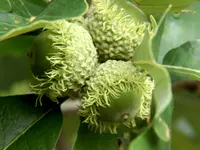
Burr Oak
1-2'
$9.95
Ships: 12/01/2026 - 04/01/2027
Description
This product cannot be shipped to California.
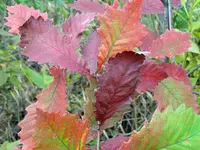
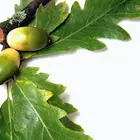
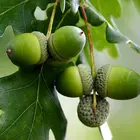
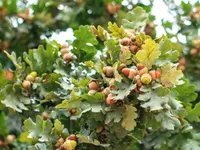
The Burr Oak Tree has several very unique traits among large shade trees and is a very important food source for wildlife. Growing in its native habitat at maturity can stand about 100' tall by 80' wide with fiddle-shaped foliage that is thick and large. The bark on lower trunks has thick, vertical flattened ridges with very deep furrows which produces large fringed acorns in the fall. It is also one of fastest-growing oaks and has been known to live 200-300 years. Displaying its bold texture of a massive trunk and huge spreading limbs attracts all forms of wildlife especially squirrels, deer and large birds. This oak is very drought tolerant due to its very deep taproot system and is cold hardy in zones 2-8. It is highly recommended that Burr Oak Tree be planted in mid winter.
Characteristics
| Hardiness Zone Range | 3 - 8 |
Pricing
Zones
USDA Hardiness Zones
A hardiness zone is a geographic area defined as having a certain average annual minimum temperature, a factor relevant to the survival of many plants. In some systems other statistics are included in the calculations. The original and most widely used system, developed by the United States Department of Agriculture (USDA) as a rough guide for landscaping and gardening, defines 13 zones by long-term average annual extreme minimum temperatures. It has been adapted by and to other countries (such as Canada) in various forms. A plant may be described as "hardy to zone 10": this means that the plant can withstand a minimum temperature of −1.1 to 4.4 °C (30 to 40 °F).
Grows in zones: 3 - 8
This product grows in your zone!
A hardiness zone is a geographic area defined as having a certain average annual minimum temperature, a factor relevant to the survival of many plants. In some systems other statistics are included in the calculations. The original and most widely used system, developed by the United States Department of Agriculture (USDA) as a rough guide for landscaping and gardening, defines 13 zones by long-term average annual extreme minimum temperatures. It has been adapted by and to other countries (such as Canada) in various forms. A plant may be described as "hardy to zone 10": this means that the plant can withstand a minimum temperature of −1.1 to 4.4 °C (30 to 40 °F).