Braeburn Apple Tree
+/-3' Tall
$19.95
Ships: 12/01/2026 - 03/15/2027
Description
This product cannot be shipped to California.
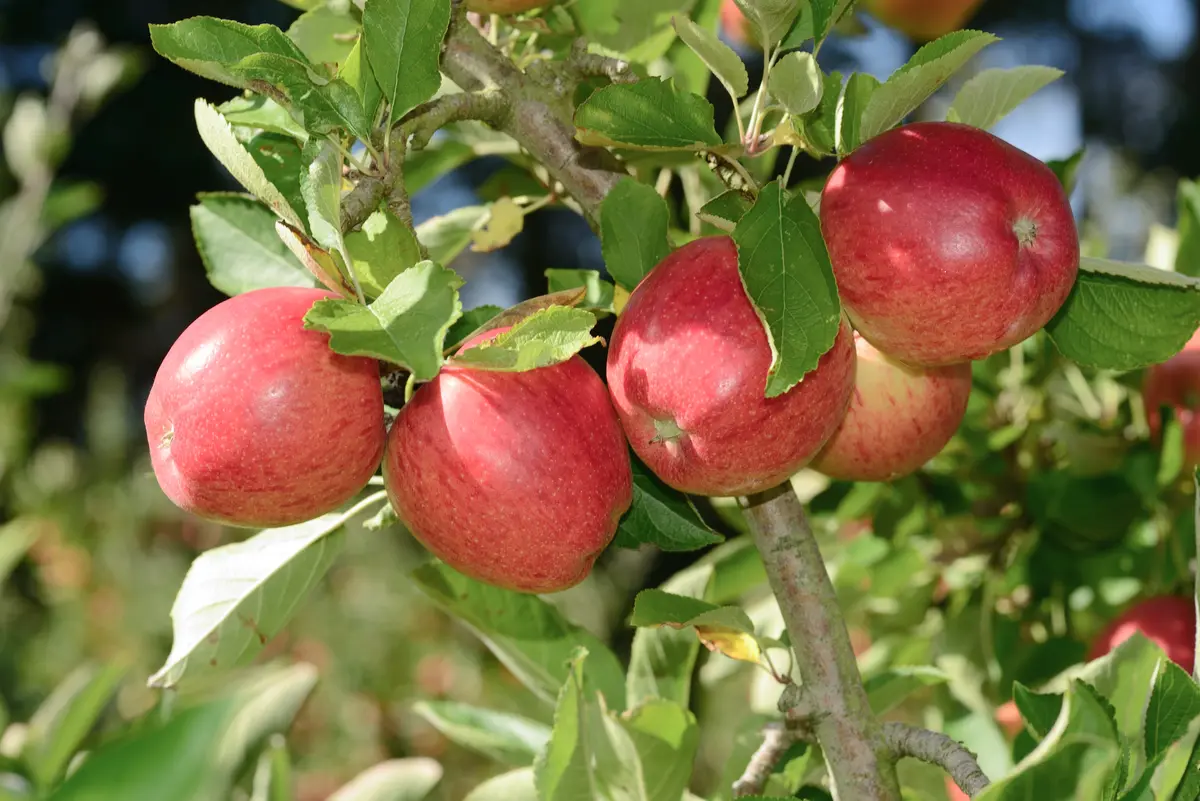
The Braeburn apple tree, a semi-dwarf apple tree, is a cultivar that produces firm, crisp, and very juicy apples with a mildly sweet tart flavor. It's considered more flavorful than Granny Smith. Good for eating, cooking, cider and sauce. The Braeburn is also a heavy producer, yielding medium to large apples. The skin is green overlaid with stripes of dark crimson and the delicious fruit stores very well. The Braeburn Apple Tree is self-fruitful but pollinates well with the Fuji Apple Tree and ripens late October into early November. 500 chill hours.
Characteristics
| Bloom Color | White |
| Bloom Time | Early-Mid Spring |
| Fruit Color | Reddish-Orange streaks on Yellowish-Green |
| Fruit Size | 2.5-3.5 inches |
| Hardiness Zone Range | 4 - 8 |
| Pollination | Self-Fertile |
| Ripens/Harvest | October - November |
| Shade/Sun | Full Sun |
| Soil Composition | Loam |
| Soil Moisture | Well Draining |
| Soil pH Level | 6.0-7.0 |
| Taste | Sweet Tart |
| Texture | Firm & Crisp |
| Years to Bear | 3-5 |
Pricing
| Size | Price | Ships |
|---|---|---|
|
+/-3' Tall
|
$19.95 | 12/01/2026 - 03/15/2027 |
|
4-5' Tall
|
$29.95 | 12/01/2026 - 03/15/2027 |
|
5-6' Tall (Branched)
|
$39.95 | 12/01/2026 - 03/15/2027 |
|
+/-6' Tall (Branched)
|
$49.95 | 12/01/2026 - 03/15/2027 |
|
5-6' (3/4"-1" caliper Branched/EZ- Pick - Fruiting Size)
|
$69.95 | 12/01/2026 - 03/15/2027 |
|
6-7' (1-1.25" caliper Instant Orchard)
|
$94.95 | 12/01/2026 - 03/15/2027 |
Zones
USDA Hardiness Zones
A hardiness zone is a geographic area defined by average annual minimum winter temperatures, helping gardeners determine which plants can survive in their region. Developed by the USDA, the 13 numerical zones indicate cold hardiness—for example, a plant "hardy to zone 10" tolerates minimum temperatures of 30 to 40 °F (−1.1 to 4.4 °C).
Grows in zones: 4 - 8
This product grows in your zone!
A hardiness zone is a geographic area defined by average annual minimum winter temperatures, helping gardeners determine which plants can survive in their region. Developed by the USDA, the 13 numerical zones indicate cold hardiness—for example, a plant "hardy to zone 10" tolerates minimum temperatures of 30 to 40 °F (−1.1 to 4.4 °C).