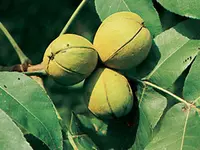
Shellbark Hickory Tree
6-12"
$8.95
Ships: 12/01/2026 - 04/01/2027
Description
This product cannot be shipped to California.
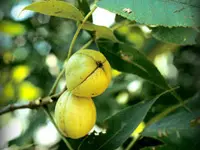
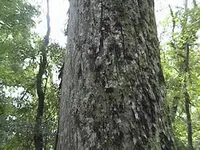
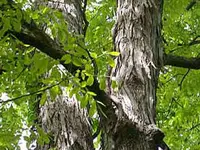
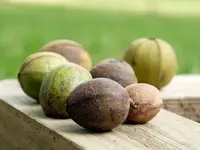
The Shellbark Hickory Tree is similar to the Shagbark hickory tree in its bark, though it is not as shaggy. This hickory features larger sized nuts than other types, and can generally be found in wet, fertile bottomland areas. Shellbark is a less common variety compared to such varieties as the Shagbark and Bitternut, however it is no less worthy to be planted, and it's wood is used in many of the same ways. Choose Willis Orchards for top-quality hickory nut trees for sale!
Characteristics
| Bloom Color | Greenish-Yellow |
| Bloom Time | Late Spring |
| Fruit Color | Golden Brown |
| Fruit Size | 1-2 inches |
| Hardiness Zone Range | 5 - 9 |
| Pollination | Requires Pollinator |
| Ripens/Harvest | September - November |
| Shade/Sun | Full Sun |
| Soil Composition | High Organic Content / Silty Loam |
| Soil Moisture | Consistently Moist |
| Soil pH Level | 6.0-7.0 |
| Taste | Sweet & Buttery |
| Texture | Meaty & Crisp |
| Years to Bear | 10-20 |
Zones
USDA Hardiness Zones
A hardiness zone is a geographic area defined as having a certain average annual minimum temperature, a factor relevant to the survival of many plants. In some systems other statistics are included in the calculations. The original and most widely used system, developed by the United States Department of Agriculture (USDA) as a rough guide for landscaping and gardening, defines 13 zones by long-term average annual extreme minimum temperatures. It has been adapted by and to other countries (such as Canada) in various forms. A plant may be described as "hardy to zone 10": this means that the plant can withstand a minimum temperature of −1.1 to 4.4 °C (30 to 40 °F).
Grows in zones: 5 - 9
This product grows in your zone!
A hardiness zone is a geographic area defined as having a certain average annual minimum temperature, a factor relevant to the survival of many plants. In some systems other statistics are included in the calculations. The original and most widely used system, developed by the United States Department of Agriculture (USDA) as a rough guide for landscaping and gardening, defines 13 zones by long-term average annual extreme minimum temperatures. It has been adapted by and to other countries (such as Canada) in various forms. A plant may be described as "hardy to zone 10": this means that the plant can withstand a minimum temperature of −1.1 to 4.4 °C (30 to 40 °F).