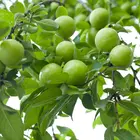
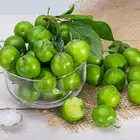
Persian Green Plum
Description
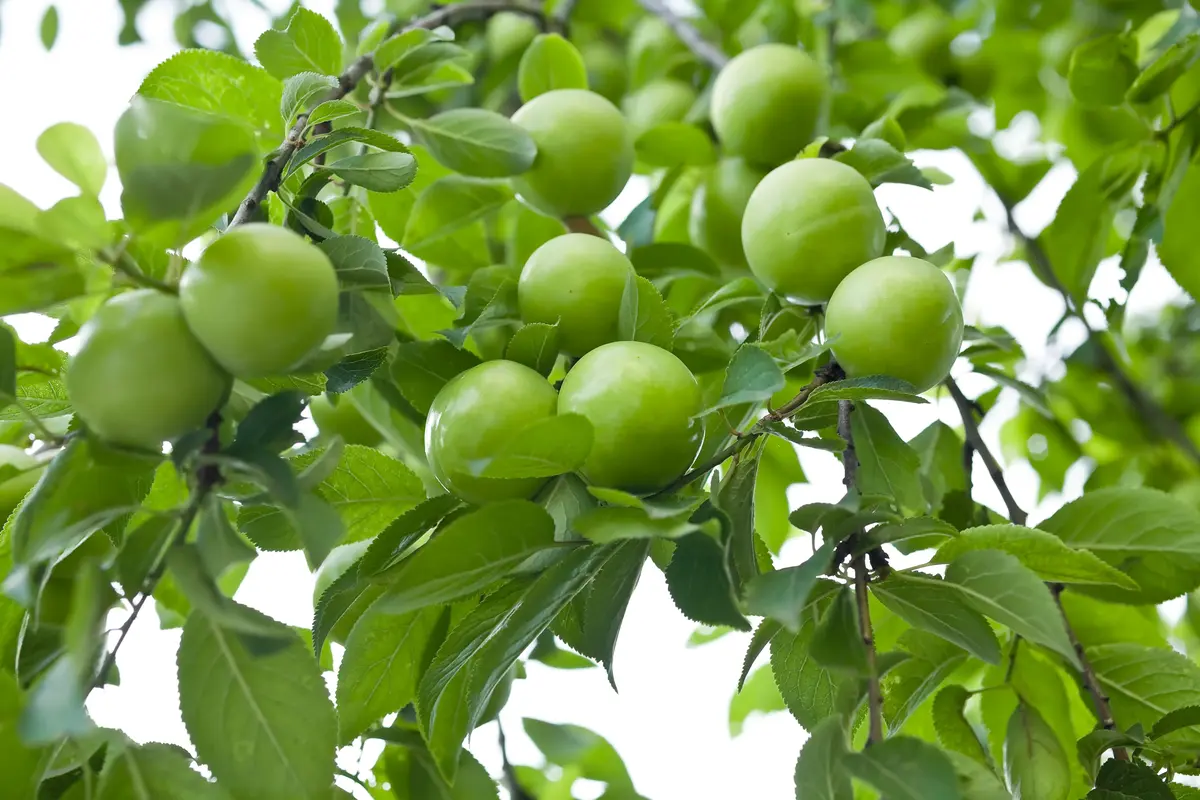
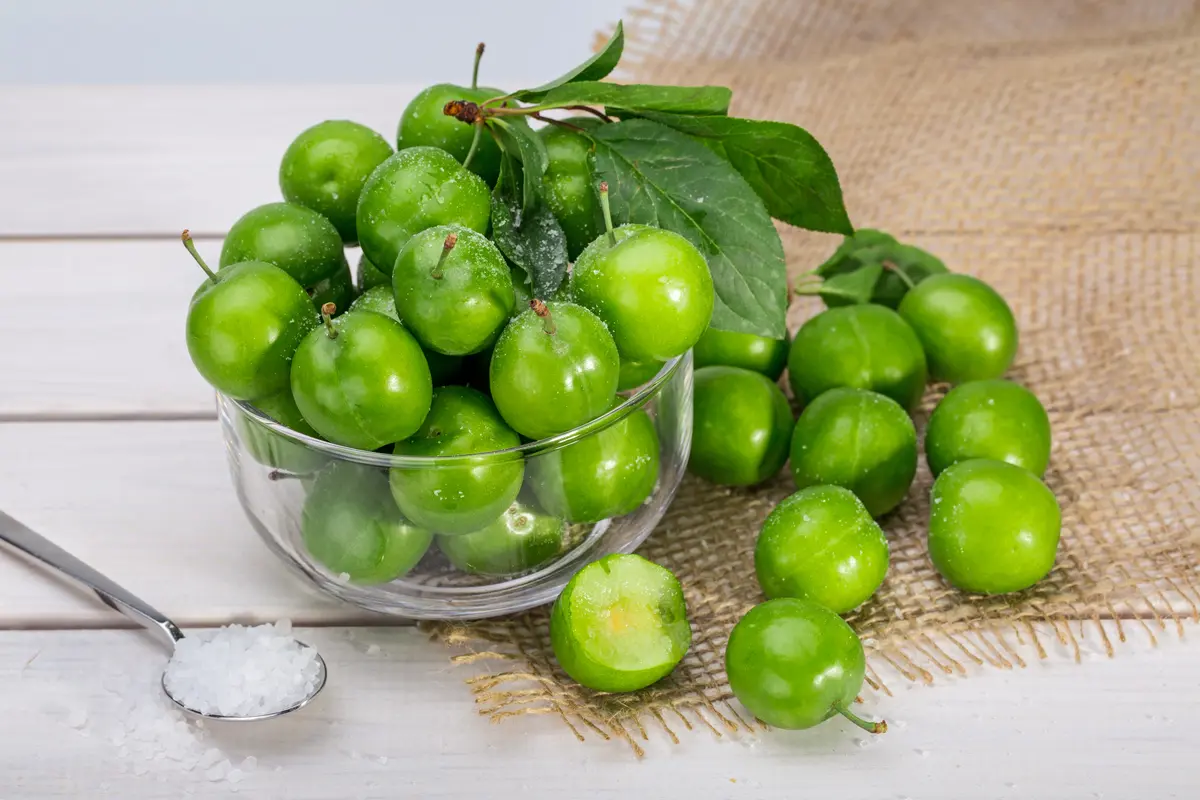
Our Persian Green Plums for sale (Goje Sabze) are a small, sour, green plum that originated in the area of modern-day Iran. They are widely grown and recognized among all Middle Eastern cultures. This unique fruit tree thrives in zones 6–9, making it a great choice for many home orchards. Persian Green Plums are traditionally eaten when it is green, crunchy and has a juicy pleasant tart flavor. They are often enjoyed with a sprinkle of salt to contrast the addictively sour flavor. If the fruit is allowed to remain on the tree until full ripeness, it will become a small, golden, sweet plum that is also very tasty to eat. Enjoy crisp, tart fruit with our Persian Green Plum Trees for sale.
Our Persian Green Plum trees for sale are relatively small and are self-fertile so they make a great addition for any home-garden or for those with limited space. (Most areas will harvest May - June. Requires a minimum of 350 - 400 chill hours.)
Characteristics
| Bloom Color | White |
| Bloom Time | Spring |
| Fruit Color | Green |
| Fruit Size | Small |
| Hardiness Zone Range | 6 - 9 |
| Pollination | Self-fertile |
| Ripens/Harvest | Early Summer |
| Shade/Sun | Full Sun |
| Soil Composition | Sandy, loamy, and well-draining |
| Soil Moisture | Water weekly |
| Soil pH Level | 6.0-7.0 |
| Taste | Sour |
| Texture | Firm |
| Years to Bear | 2-3 years |
Pricing
| Size | Price | Ships |
|---|---|---|
|
+/-6' (3/4" caliper - Fruiting Size)(Rare to find and Unique)
|
$74.95 | 11/15/2026 - 03/15/2027 |
Zones
Grows in zones: 6 - 9
A hardiness zone is a geographic area defined as having a certain average annual minimum temperature, a factor relevant to the survival of many plants. In some systems other statistics are included in the calculations. The original and most widely used system, developed by the United States Department of Agriculture (USDA) as a rough guide for landscaping and gardening, defines 13 zones by long-term average annual extreme minimum temperatures. It has been adapted by and to other countries (such as Canada) in various forms. A plant may be described as "hardy to zone 10": this means that the plant can withstand a minimum temperature of −1.1 to 4.4 °C (30 to 40 °F).